
Showing posts with label ART. Show all posts
Showing posts with label ART. Show all posts
25 June 2018

COLOUR
COLOR THEORY
The Science of ccolour, color is a property of ligh. Our eyes see only a small part of the electromagnetic spectrum.
COLOUR= Light-colour
Pigment-colour
The Science of ccolour, color is a property of ligh. Our eyes see only a small part of the electromagnetic spectrum.
COLOUR= Light-colour
Pigment-colour
- Primary: BLUE (cian), MAGENTA AND YELOW.
- Secundary: ORANGE, PINK AND GREEN
BASKET TIP

- The basket tip is a sport practised with 2 teams with some players (often 5 players). It's goal is to put a ball in a hoop.
- For that, only hands can be used. Basketball started in 1891 in the American university, and the idea came from a teacher called James Naismith.
15 May 2018
AAKASH NIHALANI
STREET ART:
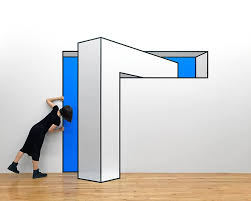 Aakash Nihalani
Power Point
Click in Powerpoint, and you open this work of Aakash Nihalani.
Power Point
Click in Powerpoint, and you open this work of Aakash Nihalani.
04 May 2018
ARTIST AND PIGMENT
COBALT VIOLET:
NAMES FOR COBALT VIOLET:
- The first violet pigment it was prepared by Salvètat in 1859. Is stable, but high cost and its low coloring power prevented its wider use in paints. It is not very different from the color Cobalt Green. His drawbacks include the high cost and power of weak coloration, which limits its use among painters. It was quickly replaced by the cleanest, strongest violet manganese pigment.
NAMES FOR COBALT VIOLET:
- ENGLISH NAMES:
German French Italian Kobaltviolett violet du cobalt violetto di cobalto - The name "Cobalt violet" comes from Middle High German kobolt = an underground gobli
PIGMENT IN ACRYLICS
- What is acrylics?:
- Of acrylic paint allows it to mimic the very different qualities of both watercolors and oil paints. Acrylics allow artists to capture bold colors and create images that appear solid and substantial.
- Acrylic paint consists of pigment suspended in a binder of acrylic polymer emulsion. Water is the vehicle for the acrylic polymer emulsion.Acrylics are sold in tubes or jars. Acrylics can be applied to the support.
2. Mixing paints:
- The paints are mixed on the palette to create new hues, tints and shades. Because acrylics dry quickly, only a small amount of paint is applied to the palette at a time. Only the necessary colors are used.
- The paints on the palette need to be kept moist in order to remain workable. If they are allowed to dry, they will harden and will no longer be useful for painting.
- The amount of water that is used when painting with acrylics will have a strong bearing on the consistency of the paint and its appearance on the canvas.
3. Sketch & Gess:
- Acrylic gesso will essentially “lock in” the graphite so that it won’t smear or become messy when acrylic paint is added.
4. What is acrylic gesso?:
- Acrylic gesso is a combination of acrylic paint mixed with calcium carbonate. An acrylic polymer med Gesso is often used as to prime the canvas before starting an acrylic painting, because it makes it easier for the work surface to accept the paint.
- Gesso is a handy tool for painting with acrylics, but it is not necessary for use with any other mediums, such as watercolors, pastels, or oils.
5. Underpainting:
- Creating the underpainting basically involves quickly blocking in the main areas of color, as well as blocking in the dark and/or light spots.
6. Lights & Shadows:
- Acrylics can be applied thickly or thinly, the underpainting is typically painted using fairly thinned acrylic paint. This is similar to techniques used in watercolor painting.
7. Adding Color:
- Artists can choose to work with underpaintings in different ways. For example, some artists will make sure the entire surface is covered with paint before working on the details.
- It is perfectly possible to bring one specific area of the painting to completion, while the rest of the painting has not even had a touch of paint.
8. Details:
- Because acrylics dry quickly, it is easy to layer the colors over top of one another. This makes it easy to fix mistakes. Contrast this with watercolors, where it is possible to layer colors - but the translucency of watercolors means that mistakes are much more difficult to cover up in this way.
9. Layering & Glazing:
- Most of the painting was created using a layering process, in which one layer of paint is added on top of another.
- Once the paint is dry, it is possible to use a “glazing technique” in which a watery acrylic paint is added to certain areas to help blend that area and bring depth to that area of the painting.
- In addition to water, there are also acrylic mediums that can be used to create an acrylic glaze, such as Acrylic Retarder and Glazing Liquido.
- The varnish will provide a protective layer over the paint, protecting the artwork against UV rays, dust, dirt, and many other unforeseen calamities. If the painting should get dusty or dirty, it can simply be gently wiped clean with a soft, wet cloth, with no worry about removing or damaging the paint. For these reasons, varnish also helps to preserve the longevity of the acrylic painting. Additionally, because varnish “seals” the painting, it also helps to bring the painting together, making all the various areas of paint appear more unified.
20 March 2018
EL PUNTILLISMO
- Miguel Endora is an artist from Miami (Florida), who has specialidez in the technique of pontillism or stippling, making spetacular works in black and white by the only graphic representation of the point in a single colour. It´s impressive how Miguel managues to ¨iluminate¨ ink and paper with dimension, depth and great precision thanks to this techique of stippling.
- His best know work is that of ¨Hero¨, a drawing of this father made of approximately 3.2 million points. It was also his first drawing that he decided to document with a video in order to allow himself and others to understand the evolution of this drawing. He was able to determine the numb of points per second, by the amount of time of time working
20 December 2017
MAKE A CIRCLES

MAKE A TRIANGLE

18 December 2017
VOCABULARY: UNIT 2
VOCABULARY UNIT 2
Triangle: it is a flat figure with 3 sides and 3 angle.
- Definitions and classification about triangle
ACCORDING TO THE SIDE:
Equilateral triangle: has 3 sides equals and angles too.
Isosceles triangle: has 2 sides equals and 2 angles too.
Scalene triangle: has 3 sides diferents.
ACCORDING TO THE ANGLES:
Right triangle: has 1 angle of 90º.
Acute triangle: has 3 angle ⟵ 90º
Obtuse triangle: has 1 angle ⟶ 90º
2. Definitions of quadrilaterals:
Quadrilaterals: there are polygons with 4 sides and 4 vertices (angles)
13 November 2017
HALLOWEEN
USA:
Halloween night in the USA UU It is a party that took adults and children alike. The youngest ones go out in the neighborhood in search of sweets and candies with the phrase "trick or treat", which is the literal translation of trick or treat and which actually means "scare or sweet" and that adults usually stay at home with a good scary movie or enjoy themed parties at night and other great as small coincide in leaving home with their Halloween costume.
The youngest players play the famous trick or treat or the typical Apple Duck, in which children with blindfolds have to try to capture apples with water in their mouths.
Food is another of the traditions maintained by the English on the day of the dead. The restaurants take advantage of the festivity to create a menu with special dishes. In this way we can find terrifying names and curious creations such as the famous "amputated fingers" and the Halloween pumpkin pie.
It offers a number of interesting attractions, starting with the Toronto Ghost Walk, which consists of a two-hour guided tour of a tour located in the downtown area (downtown) in which they relate all the darkest moments and Spooky of the history of the Canadian city. 15 stops through murders, famous ghosts and enchanted places.
SPANISH:
December 31 in Spain has always been the eve of the day of all the saints that has as tradition the visit to the cemeteries in which the loved ones who have died are remembered and flowers are deposited in their place of rest. The arrival of Halloween has not interrupted this tradition at all and they have been perfectly compatible, being Halloween a relief focused on leisure with respect to the seriousness that is the day of all the saints.
INGLATERRA:
CANADIAN:
JAPAN:
The Japanese maintain the tradition of dressing up and part of the decoration, only that they make it their own. There's more to see as they design their own Halloween pumpkins that do not look too much like the classic Jack O Lantern.
11 November 2017
VOCABULARY
Basic geometry concepts and
definition
·
Geometry: it
is the area of knowledge that studies the studies the elements and operations: used
points, lines, shapes… and come from ancient Greece.
·
Point: two
lines that are cut.
·
Line: is a
succession of point.
·
Ray: is a
line that starts at the end point and never ends.
·
End point:
it is the end point of a segment.
·
Mid-point:
it is de mid-point that is in the center of the line.
·
Line
segment: it is one line which two points.
·
Straight
line: two points that follow the same direction.
·
Plane:
double dimension.
·
Length: the
measure of the end the beginning of things.
·
Freehand:
draw without instrument.
·
Technical
drawing: drawing with the aid of instruments.
·
Compass:
used to make circles and to measure.
·
Protractor:
used to measure the angles.
·
Set
squares: cartabón: 45 grades and escuadra 60 or 30 grades. Materials for
practice draw.
·
Eraser:
instrument for remover.
·
Marker: is a pen having red tips.
·
Ruler:
instrument used to draw straight line.
Subscribe to:
Posts (Atom)